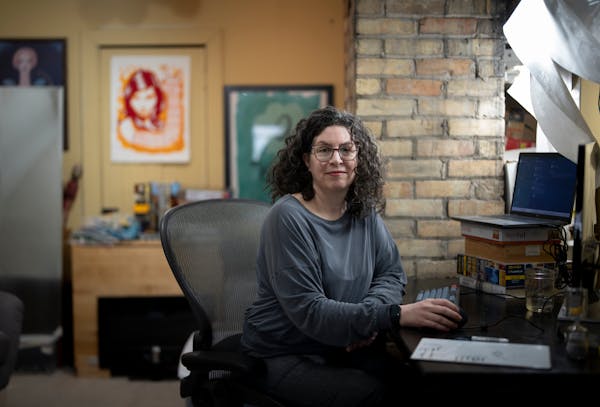
For years, the future for CoAxia looked promising.
The U.S. Food and Drug Administration had given the Maple Grove med-tech start-up approval to use its device to redirect blood flow from the lower body to the torso and to treat people suffering from blood vessel spasms in the brain. Then, CoAxia asked for permission to use its device on stroke patients, a critical market for CoAxia to have long-term success.
Regulators required an expensive medical trial that took four years to enroll 500 patients. The FDA later refused appeals of data showing the device was beneficial and safe for some stroke patients.
At every turn, CEO Andrew Weiss said, CoAxia has been delayed and denied, with new requests for information costing more time and money. After 10 years and $70 million spent, CoAxia teeters on the brink — its employee ranks culled from 40 to just one while it clings to hope for a last-minute appeal.
"I would think we were the last company that would take two years to get through this," Weiss said, who is down to working part time for the firm.
Weiss and others in Minnesota's medical technology community say CoAxia's story illustrates an ongoing withering of a vital industry due to what they describe as suppressing federal bureaucracy. To highlight their concerns, a petition has been filed with the FDA on behalf of the 150 members of the Minnesota Medical Device Alliance (MDMA), protesting the lengthening time it takes to get a new device to market
"There is a sense of desperation out there," said attorney Mark DuVal, who filed the petition. A spokeswoman for the FDA said the agency does not comment on pending applications. She also said the FDA is reviewing the petition and "will respond directly to the petitioner."
Industry leaders say the FDA — in the wake of medical device recalls, patient deaths and lawsuits — doesn't want to risk rushing products to the market. But the prolonged approval process is driving away innovators and the venture capital that small med-tech companies need to survive.
The implications for companies like CoAxia and the more than 350 med-tech companies in the state are grim, Weiss said. "If you shut down the group of people who work together to make these technologies, it's hard to put them together again," he said.
More time, fewer funds
In 2006, the average time to a decision on the most common applications to the FDA for medical device approvals was 99 days, according to the FDA. By 2010, that number had risen to 153 days. The FDA reported that in 2011, a review was expected to take 143 days. In reality, it can take four years or more from beginning to end for lower risk devices to reach the market.
Time carries a cost for companies: an estimated $1.8 million for an eight-week delay in scheduling a meeting, $10.8 million for an extra year of negotiating an exemption to investigate a device, according to an industry report.
That, in turn, reduces return on investment, industry officials say. It is no coincidence that investors are pulling back.
Venture capital investment in start-up medical device companies has fallen — from $789 million in 2007 to $184 million in 2012, according to a report for the National Venture Capital Association. Considering that venture capital is the lifeblood for small companies and that 80 percent of medical technology companies employ fewer than 50 people, many fear key jobs will disappear as small firms flounder.
Dr. Jeff Sherman, an Edina spine surgeon, was chief medical officer for Disc Dynamics, an Eden Prairie company that developed a minimally invasive device to treat low-back pain. After years of work, after raising $65 million and conducting positive European and U.S. studies, the Eden Prairie start-up closed shop when the FDA kept adding new study requirements — and costs — to its application. Patients are the ones now paying the price, he said, because they don't have access to something that could have helped them.
"There is nothing out there like that device. There is nothing being done," he said. "And the clinical results that we had for our European study won a research award from a major spine society."
Sherman is involved in a number of other start-ups, and he acknowledges that some devices are being approved. But the FDA's current stance against risk is stifling "truly transformative" products, he said. "Until the FDA changes some of its process, much of this innovation is going to be done outside the United States."
More than just FDA
LifeScience Alley, a Minnesota-based trade association that is an advocate for the medical technology industry, has often taken the role of "good cop" in dealing with the FDA — even going so far as to partner with the agency in developing strategies to speed the device approval process. Nonetheless, Shaye Mandle, LifeScience Alley's executive vice president, said approval delays are sapping the industry.
"The facts sort of are the facts," he said. "Is it getting worse? The holistic answer is: 'Yes, it is.' "
But Mandle said there are "so many pieces" at play in what is hurting the device industry that it's too simplistic to lay the blame at the feet of a cautious FDA. A new medical device tax, which saps millions a month from med-tech companies, "is relevant," he said. So, too, are overall poor economic conditions and aggressive competition from Europe, Japan and China to woo jobs overseas.
But the uncertainty of the approval process plays a major role in chasing away investment, he said. An industry that has always been a risky investment now faces reduced return on investment, making it too risky for some, Mandle said.
The industry was lamenting much the same thing a couple of years ago. What has changed is that politicians are talking about ways to improve it. Minnesota Sens. Al Franken and Amy Klobuchar and Rep. Erik Paulsen have called for new efforts to speed the approval process without jeopardizing patient safety. "A lot of the rhetoric has changed," Mandle said. "So far, on the ground, I would say very little has changed."
A tough spot
Not everyone in Minnesota med-tech, of course, has a beef with the FDA.
Tim Cook, founder and president of Uromedica, said the FDA has been "demanding with respect to clinical data and safety data from us. But they've been pretty open."
Uromedica, which is going through a longer process called pre-market approval, has developed devices to treat urinary incontinence. Cook said the key with regulators has been open communication and feedback.
"I don't have a lot of complaints," he said. "They have been clear with me."
Ralph Hall, a University of Minnesota law professor who studies the FDA, said the agency is trying to address industry concerns, noting an entrepreneur-in-residence program to give regulators a better industry perspective.
The FDA also is trying to improve efficiency by giving companies faster feedback on whether their application needs to fill in some gaps, Hall said. Given that the agency receives thousands of applications each year, he said it's likely a few could stand improvement.
And, at a time when regulators come under fire for every faulty artificial hip or defibrillator wire that made it to market, some believe the FDA needs to ask tougher questions. In the end, he said, the question of whether regulators are appropriately asking tough questions or needlessly bogging down the process "needs to be a matter of public debate," Hall said.
None of which makes CoAxia's limbo any easier for Weiss and his investors to bear. After a hearing in which members of an advisory panel said they needed more data in order to make a recommendation, Weiss said the company's days appeared numbered.
In the past couple of weeks, however, CoAxia's plans to sell off its assets and permanently shut its doors have been put on hold. Weiss is talking to an FDA administrator who still could recommend the device be ruled safe and effective for stroke patients.
CoAxia is getting him more information.
James Walsh • 612-673-7428
Southwest will limit hiring and drop 4 airports after loss. American Airlines posts 1Q loss as well
Venice tests a 5-euro entry fee for day-trippers as the city grapples with overtourism

After hiring bonanza, tech workers now grapple with layoffs and disillusionment