
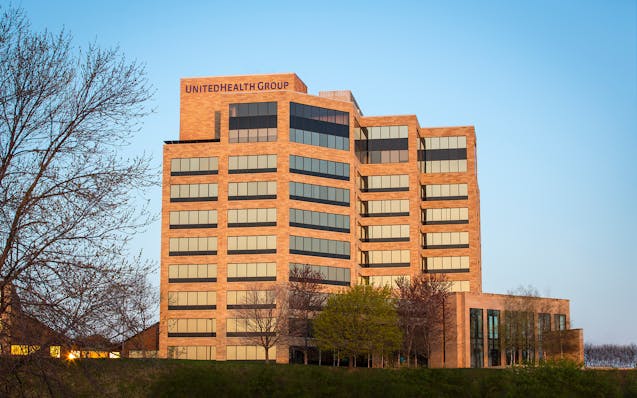
UnitedHealth reveals hackers may have stolen data on a sizeable number of Americans
The Minnetonka-based health care giant will offer identity protection and credit monitoring as preliminary investigation suggests hack impacted data for 'substantial proportion' of Americans.
Delta raises ground worker, flight attendant base pay 5%, affecting more than 5,000 in Minnesota

The carrier is also increasing the minimum starting rate for all U.S. positions to $19 per hour.
Developer of St. Paul's Keg & Case food hall declares bankruptcy
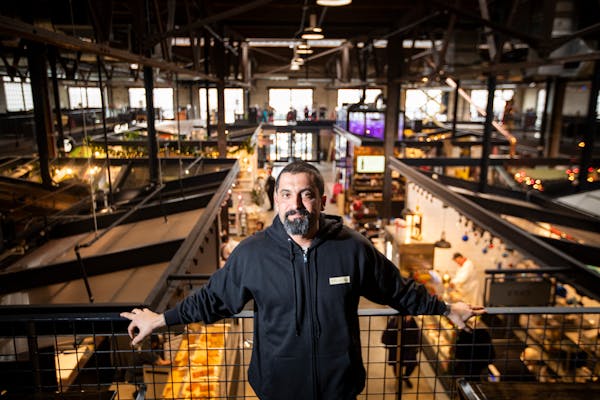
Craig Cohen listed the W. 7th neighborhood project when filing for Chapter 7 bankruptcy with more than $11 million in liabilities.
Business

Richfield construction subcontractor sentenced for insurance fraud
Fabian Espinosa, owner of Richfield-based Fabian Espinosa Construction LLC, faces three years' probation.
Local
Sammy McDowell, celebrated owner of Sammy's Avenue Eatery on the North Side, dies
Long a fixture of the north Minneapolis community, McDowell opened the sandwich and coffee shop in 2012.
Business

Money, Work, Know-How
Stories for Minnesotans who want to develop careers, build businesses, find opportunities, make more money and spend it wisely — and about the people who can help them do it.
Business

How to avoid going broke soon after starting a business
From better money management to getting a second job, entrepreneurs share what they do when the business comes first.
Local

Minnesota House lawmakers push forward fertilizer tax to clean up contaminated wells
The tax on farmers, smaller than earlier proposals, cleared a key House committee.
Business
Is your company on the list of Minnesota's 2022 Top Workplaces?
Worker expectations change at Minnesota firms as pandemic retreats.
Local
Why you should donate clothing: It (probably) won't end up at the dump
Fast fashion is tough on the climate, but clothes can have second and third lives.
Local

Six southwest Twin Cities area newspapers will publish last issue this week
The Southwest News Media publications are part of MediaNews Group, which is owned by Alden Global Capital, a hedge fund known for gutting and then closing local papers.
Business

How to parry rising insurance costs
Not only is the cost of insurance going up, it's rising faster than it has in almost 50 years.
Business

Keeping personal finances simple can improve your well-being
Practical steps include automating the movement of money from checking into savings accounts, similar to automatic withdrawals from your earnings into retirement savings at work.
Business
![Capella Tower at 225 South Sixth St. Tuesday September 6, 2011. ] GLEN STUBBE * gstubbe@startribune.com Minneapolis skyline from the 51st floor of IDS](https://arc.stimg.co/startribunemedia/7C263DJZQTPRDEXI74SMH2M3HI.jpg?h=91&w=145&fit=crop&bg=999&crop=faces)
Two major downtown Minneapolis towers face change as hybrid shuffle continues
Wells Fargo Center is now on the market, and Capella University cuts its space by more than half in the tower that bears its name.
Business

Thrivent has found a way for everyday folks to get a piece of the private equity market
Investors can pay as little as $50 a month to join Thrivent's popular asset allocation funds, which will now carry private equity investments.
Business
With $324.2 billion in revenue, UnitedHealth again tops list of Minnesota public companies
The top 50 companies as a whole posted revenue of $750.7 billion, up 7% from the year before. However, growth was slower than in 2021.
Curious Minnesota

Why do so many Minnesota homeowners get free roofs after a hailstorm?
Stormy weather has been beating up local roofs lately. But insurance companies are also scaling back coverage, arguing that "something's got to change."
Business

Conservative lawmakers lead objections to Vista's deal to sell Federal ammunition to Czech firm
Pressure being put on Treasury Secretary Janet Yellen and federal panel that must approve foreign investments in U.S. businesses.
Agriculture
![Cattle at the Wysocki Dairy CAFO (concentrated animal feeding operation) in Armenia, Wisc. in late October. ] Aaron Lavinsky • aaron.lavinsky@s](https://arc.stimg.co/startribunemedia/GNUPD5JDUEDREIFU5RKJM2EV2Y.jpg?h=91&w=145&fit=crop&bg=999&crop=faces)
Iowa environmental groups ask EPA to step in and protect drinking water
Inspired by a successful campaign in Minnesota, the groups want the U.S. Environmental Protection Agency to intervene to prevent agricultural runoff from polluting water in northeast Iowa.
Business

Cargill to sell group of grain elevators to CHS Inc.
Cargill called CHS "the right partner for this sale" based on the Minnesota-based organizations' partnership.
Business
Minnesota added thousands of jobs in March but worker shortage still an issue
The aging population is causing pressure on the job market, though wages on the upswing.
Business

When markets turn down, why robots beat humans at picking stocks
A study from a University of Minnesota professor found robo-advisers can be a tool for newer investors who want to calm their panic when the market slides.

We've created a new destination for everything agriculture in Minnesota and around the country.
Business

Burnsville woman's sinus surgery went great — until she got the $32,449 medical bill
Billing dispute provides a window on tensions between insurers and health care providers over coverage denials.
North Metro

Anoka expands downtown sip-and-stroll 'social district'
People can purchase alcohol and drink it as they walk through areas in the north metro city's historic downtown; the district opens May 1.
Business

Ramstad: Misinterpreting data led me to the wrong conclusion about Minnesota retirees
My misreading undermined and distracted from my main point about fewer working-age Minnesotans.
Browse Business Sections
Latest Columns



Elsewhere in Business
- Stock market today: Asian stocks track Wall Street gains ahead of earnings reports
- Facing pressure from rights groups, World Bank suspends funding for Tanzania tourism project
- 2 Malaysian military helicopters collide and crash while training, killing all 10 people on board
- Tensions between Beijing and Washington are the biggest worry for US companies in China, report says
- Starbucks takes on the federal labor agency before the US Supreme Court
- Global plastic pollution treaty talks hit critical stage in Canada
- Elon Musk accuses Australia of censorship after court bans violent video
- America's child care crisis is holding back moms without college degrees
- US advances review of Nevada lithium mine amid concerns over endangered wildflower
- Trump called this visa 'very bad' for Americans. Truth Social applied for one
Most Read
- Developer of St. Paul's Keg & Case food hall declares bankruptcy
- UnitedHealth reveals hackers may have stolen data on a sizeable number of Americans
- Delta raises ground worker, flight attendant base pay 5%, affecting more than 5,000 in Minnesota
- Express files for Chapter 11 bankruptcy protection, announces store closures, possible sale
- How to avoid going broke soon after starting a business
Business
Complete coverage of business news in the Twin Cities, Minnesota and elsewhere, including Fortune 500 Minnesota companies: UnitedHealth Group, Target, Best Buy, 3M, CHS, U.S. Bancorp, General Mills, C.H. Robinson, Land O’Lakes, Ecolab, Ameriprise Financial, Xcel Energy, Hormel Foods, Thrivent Financial, Polaris, Securian Financial Group, Fastenal and Patterson Cos.
